Next Phases
Standardize the Model
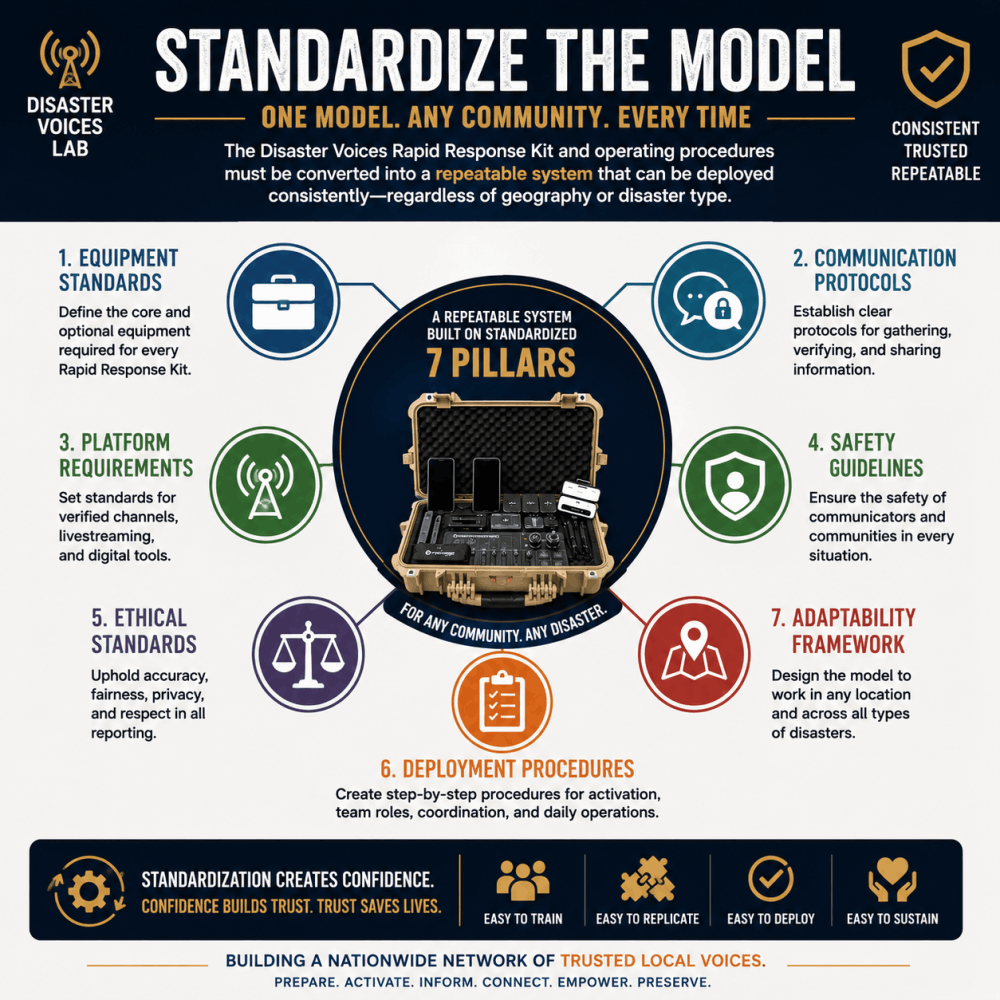
The Disaster Voices Rapid Response Kit and operating procedures must be converted into a repeatable system. This includes defining equipment standards, communication protocols, platform requirements, safety guidelines, ethical standards, and deployment procedures that can be implemented consistently regardless of geography or disaster type.
Document the Process
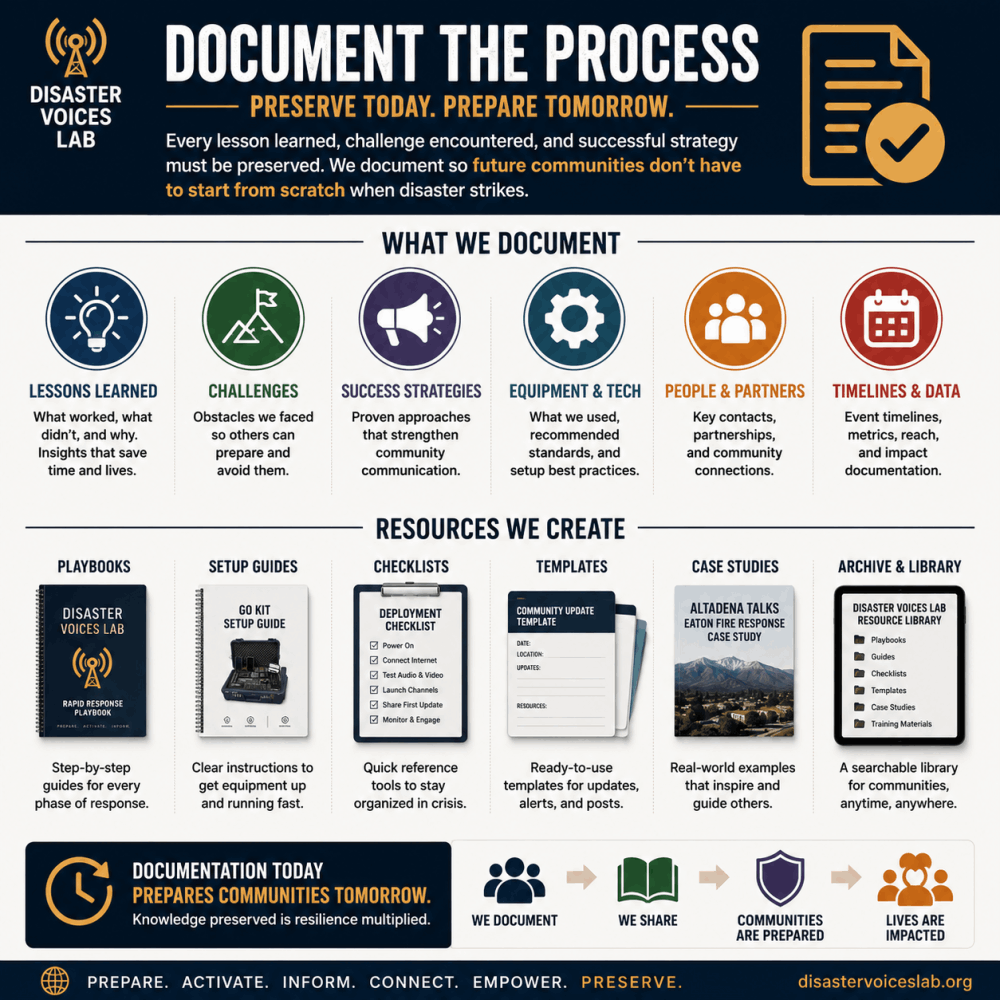
Every lesson learned, challenge encountered, and successful strategy must be preserved. Disaster Voices Lab will create comprehensive playbooks, setup guides, checklists, templates, and case studies so that future communities do not have to build their communication systems from scratch while in crisis.
Train Local Leaders
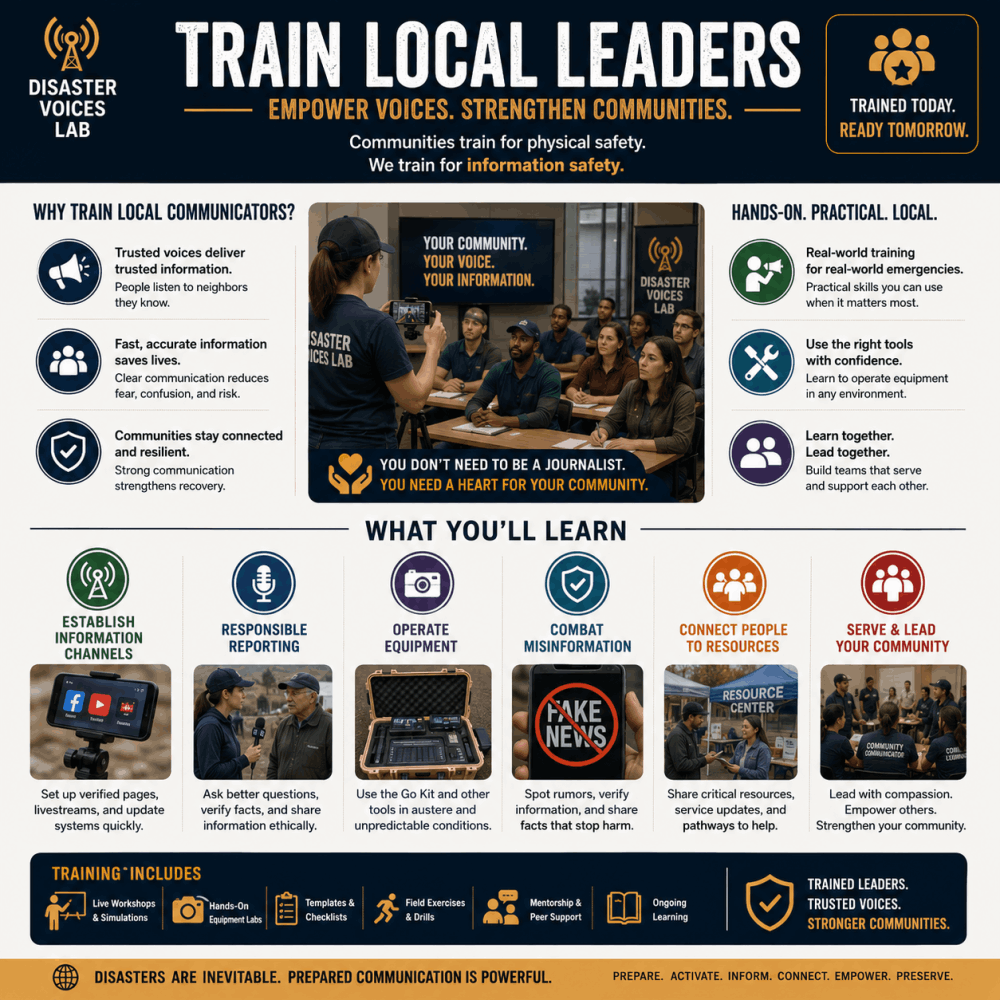
Communities already train volunteers in first aid, search and rescue, and emergency preparedness. They should also train trusted local communicators. Disaster Voices Lab will provide practical, hands-on instruction that teaches participants how to establish verified information channels, conduct responsible reporting, operate equipment in austere environments, combat misinformation, and connect residents to critical resources.
Certify Community Teams
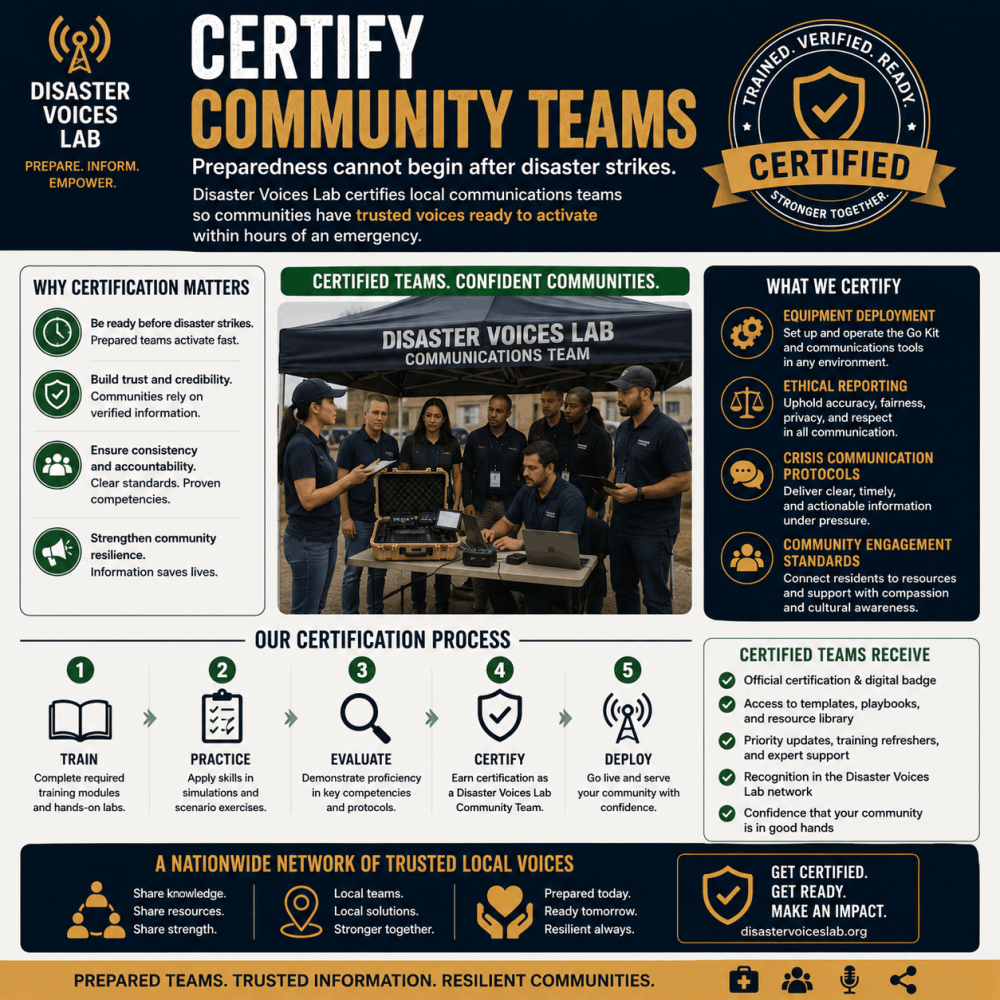
Preparedness cannot begin after disaster strikes. Disaster Voices Lab will establish a certification process to ensure communities have trained communications teams ready to activate within hours of an emergency. Certified teams will demonstrate proficiency in equipment deployment, ethical reporting practices, crisis communication protocols, and community engagement standards.
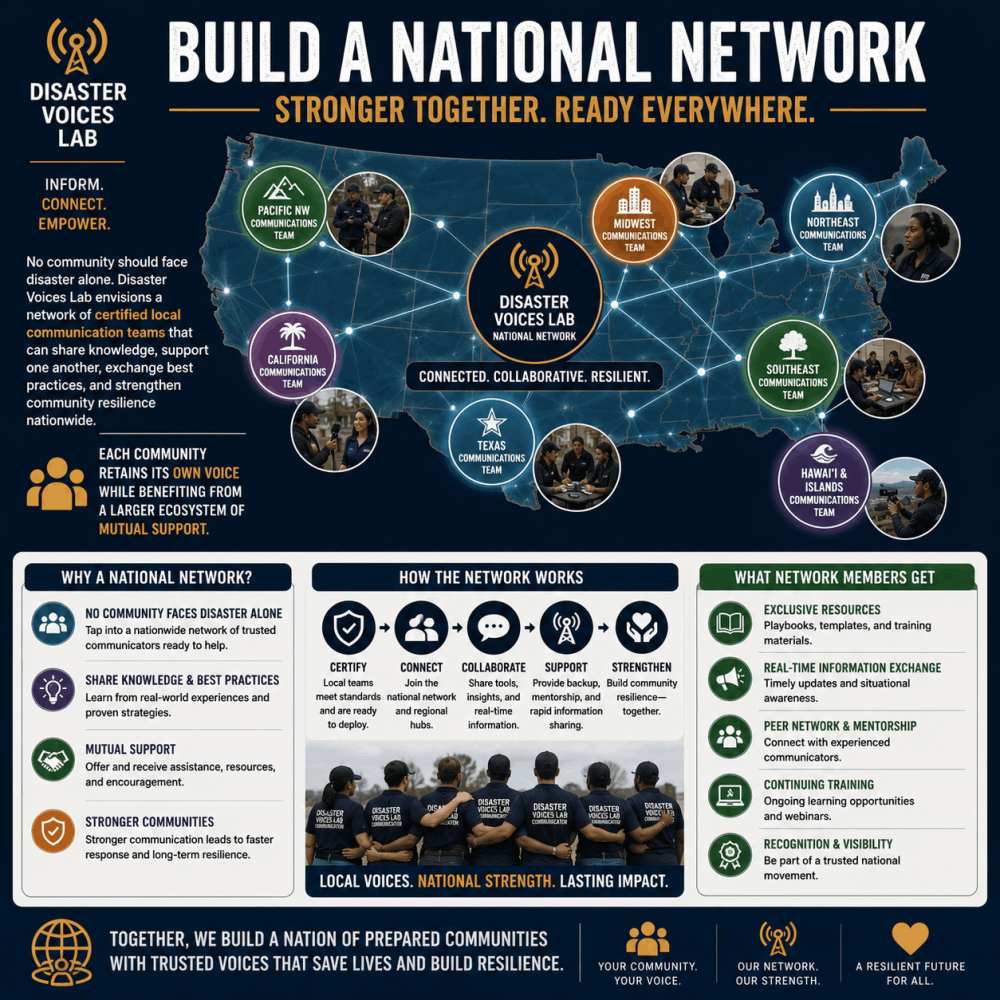
Build a National Network
No community should face disaster alone. Disaster Voices Lab envisions a network of certified local communication teams that can share knowledge, support one another, exchange best practices, and strengthen community resilience nationwide. Each community retains its own voice while benefiting from a larger ecosystem of mutual support.
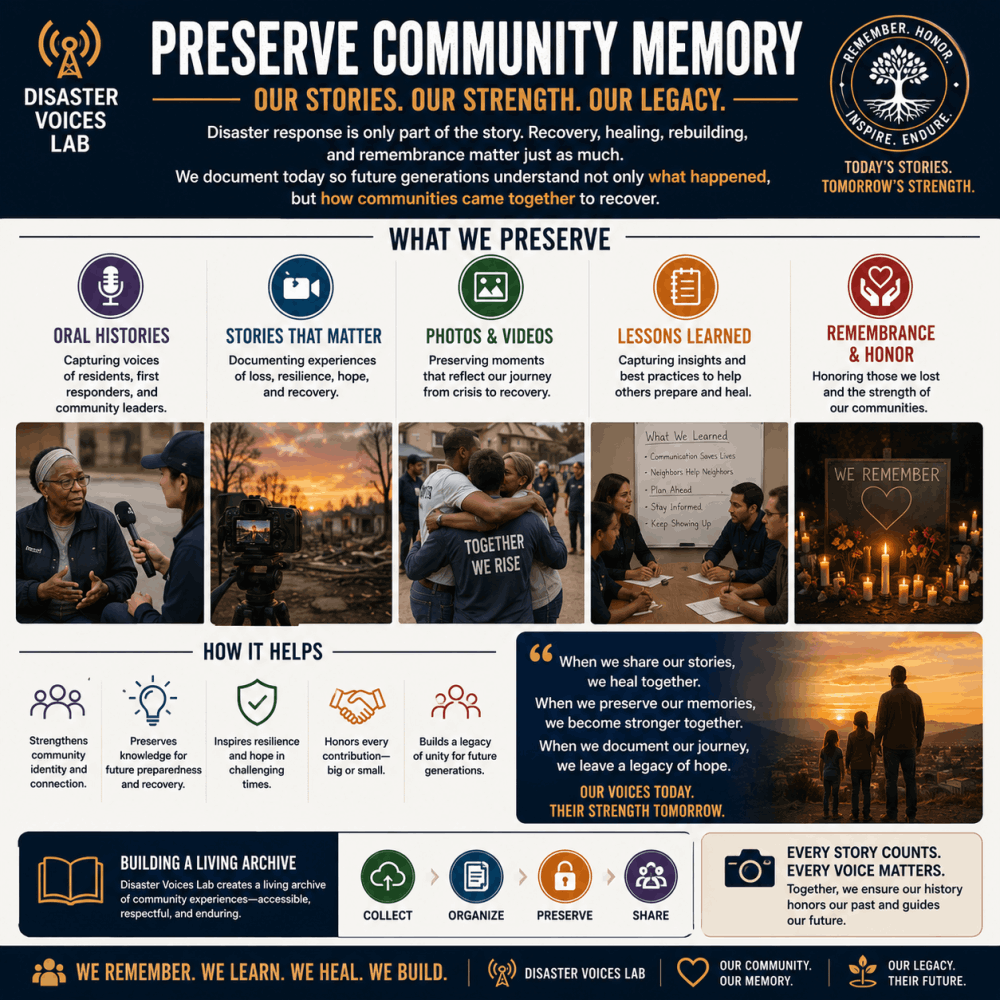
Preserve Community Memory
Disaster response is only part of the story. Recovery, healing, rebuilding, and remembrance matter just as much. Disaster Voices Lab will continue documenting community experiences, preserving oral histories, and capturing lessons learned so future generations understand not only what happened, but how communities came together to recover.